A century ago, the cost of shipping was a significant fraction of what you paid for, say, an article of clothing. As a result, goods were often manufactured close to where they would be sold. So, for example, the Garment District in Manhattan was literally where the clothes were made. Not anymore. When containerized shipping was introduced, the cost of shipping started to drop. Clever entrepreneurs realized that labor in Manhattan is crazy expensive. With cheap shipping, they could shift that work to lower cost locations in the Midwest. This was sound logic up to a point, but it wasn’t bold enough. Because shipping continued to get cheaper and cheaper still. What happens when the cost of shipping effectively drops to zero? In that case, you don’t move your manufacturing to Minnesota. You move it to Malaysia. It was one thing to see the cost of shipping was dropping. But it took some courage to see what the play was when shipping went to zero. Those who spotted the trend but only took half measures went bust. (For background on this, I highly recommend The Box by Marc Levinson.)
We live in an age where many forms of scarcity are being replaced by abundance. Something similar happened to the cost of computing. Young Bill Gates and Paul Allen were among the first to realize the implications of the crashing price of computing. Hardware would become commoditized, and all the leverage would pass to software. They made a bold bet, and I would argue that it worked out nicely for them. (For background on this, I highly recommend the Acquired podcast episode on Microsoft.)
Given this prologue, how should we think about what’s happening with artificial intelligence? Yet another expensive resource is suddenly getting cheap. The cost of How is collapsing. Let’s say you have, through close study and hard work, learned a difficult skill. You know how to compute integrals, or debug recursive sorting algorithms, or perform postorder traversal of a binary tree. I regret to inform you that Knowing How is no longer grounds for job security. You get a gold star and a pat on the head for being clever. But we now have cheap and unlimited access to vast quantities of How via Large Language Models.
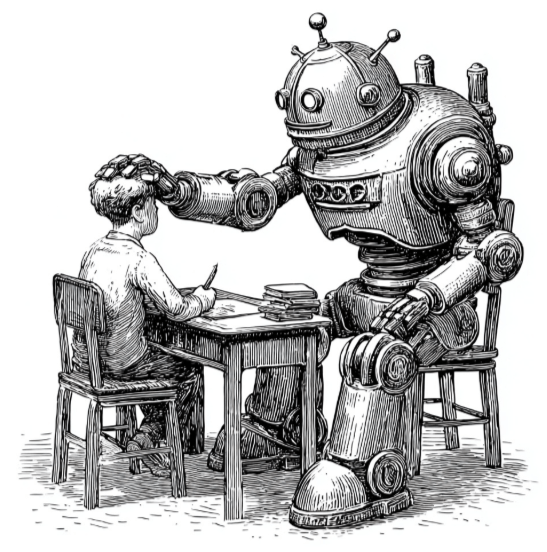
What are the implications of all this? The first thought is “Hey, this is awesome. AI will show me how to write software more efficiently.” Which is no doubt true. But what is the bold bet? In a world where you don’t need to know HOW to program, all the leverage passes to people who know WHAT to program.
What are the coming skills we need to prepare for? What are the skills we need to train for? We need to help people with What questions rather than How questions. What should you build, and why? This means helping people with articulating intent and helping them with discerning and providing feedback on intermediate results. Intent and discernment are What skills. How skills are being devalued with every passing day. What is the bold bet? What happens when the price of How collapses to zero?
Don’t get left playing a How game in a What world.
 Rambles Blog at Star Chamber