Music videos and video songs

Culture advances by composting the layer just below it. That which seemed rare and rich yesterday becomes the steaming rot for tomorrow’s sprouts. Kutiman is an Israeli musician who had the brilliant idea of using various “found” YouTube videos as the raw material for his own compositions. He’s sequencing and channeling dozens of people. I wrote about him once before. I still go back and listen to the Mother of All Funk Chords every now and then… it’s one of my favorite things on the web. More recently I came across this new Kutiman release, My Favorite Color.

It’s wonderful to think of these people collaborating in absentia through Kutiman’s deft touch. There’s something transparent and guileless about the resulting music. It made me think of Pomplamoose, a duo that Greg turned me on to. Their specialty is something they call a “video song,” a sort of intentional version of Kutiman’s mixes. In a video song, you see the anatomy of the song laid bare. As band member Jack Conte puts it (this is from the Wikipedia article)

  1. What you see is what you hear. (No lip-syncing for instruments or voice)
  2. If you hear it, at some point you see it. (No hidden sounds)

Slick MTV-style music videos are, of course, altogether different. They superimpose a highly-produced video stream on a highly-produced audio stream, although these two bear almost no relation to each other. Where music videos obfuscate with sound and fury, video songs reveal the essential whatness of the music. It’s another example of technology reclaiming the human aspect that was lost in an earlier, poorer use of technology. As Aristotle might remind us, don’t put the spectacle before the action. Pomplamoose is all about the action. When you think to yourself “By god, it sounds like he’s playing a toy piano,” you soon will see that by god he is.

Here, toy piano and all, is Pomplamoose covering Michael Jackson’s Beat It.
Tuition backlash and disruptive change in education

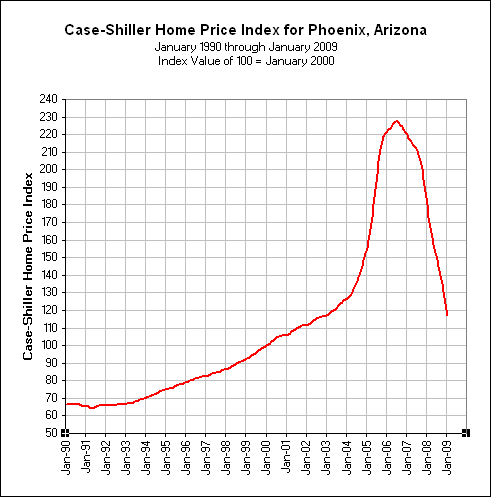
This is what a bubble looks like.

They’re generally not that hard to spot. I remember various prescient hand-wringing articles about the tech stock bubble and the housing price bubble. The problem is people don’t see the bubble all at the same time right up until the moment that it suddenly pops. At that moment we can genuinely claim to be surprised and not surprised at the same time.

Here’s another graph. This one is about college costs. You look at it and you say, “Man, that just can’t continue.” College costs are growing out of all proportion to income growth and cost-of-living increases.

It well and truly cannot continue growing at this pace, because like all exponential growth, it would eventually blot out the sun. Of course, going to college is a great thing. But sooner or later you just can’t pay for it. The rumblings of discontent are starting to show up in popular media. Here’s the anonymous Professor X writing for the Atlantic: An Anti-College Backlash?

Colleges are stuck in a textbook innovator’s dilemma in the sense that they are still making good money catering to a high-paying market. But because they won’t, or are structurally incapable of cutting prices, disruptive forces will eventually gut them from below. And those disruptive forces are almost certain to take the form of online education of one kind or another. That’s the theme of this piece from the Chronicle of Higher Education: Disrupting College. It in turn points to an analysis written by Mr. Innovator’s Dilemma himself, Clayton Christensen. And finally, here’s a short piece written about Scott McNealy’s investment in open source education. McNealy can always be counted on for a good sound bite: “Universities will be forced to decide what they are. You know, are they going to be football teams with libraries attached? That’s what a lot of them are now.”

It’s hard to say when, but change is on the way. All I know for certain is I would be nervous to be on a university’s payroll at this moment.

Three flying machines

First the hummingbird. Built by AeroVironment, this is one of those projects where the guy from DARPA says, “Here’s a giant pile of money. When I come back next year I want you to blow my mind. You understand me? BLOW MY MIND.” Putting a little bird face on it was gilding the lily in my opinion, but I won’t hold it against them. Consider: on that tiny mechanical bird they managed to stow away a control system, battery power for eight minutes’ flight, a real-time video transmitter, a copy of Reader’s Digest (May 2010), a bag of Skittles, an extra pair of underwear, a tumbler of ice, and a half-full bottle of gin. I don’t know what the DARPA guy said, but it blew my mind. Curiously, the AeroVironment guys have also built a flying model of the largest animal that ever flew. I’m speaking of course of the venerable Quetzalcoatlus northropi.

Next are the ping-pong playing quadrocopters. These machines are so impressive that the videos are starting to look boring. But the flying they’re doing is really phenomenal.

Best for last. People have been trying to build machines that fly like birds since well before Leonardo da Vinci. Everyone failed miserably. We only started to succeed with our flying machines when we realized that they don’t have to look like birds. We had to give up on that dream, because we’re just not that good, okay? Not until now, anyway. For the first time in history humans have finally succeeded in making something that really seems to fly like a bird.

This fine work is from Festo in Germany: behold the SmartBird. I wonder if it’s any good at Jeopardy?

Khan Academy

Have you heard about Khan Academy yet? The brainchild of former hedge fund analyst Salman Khan, it’s an educational site that’s got people buzzing. For all the fuss, there are really only a few new ideas here. But they are very well executed and they point the way ahead for education of all kinds, not just in-school situations.

Here’s a TED video about the topic that you can watch if you want to, but the big idea is this:

1. Use videos and screencasts to time-shift the lecture out of the classroom (sometimes called the Fisch Flip).
2. Use the newly available classroom time to maximize collaborative and teacher-assisted time spent solving problems.
3. Use game-based techniques to motivate and track progress on problem-solving.

Video lectures have been available for some time. In fact, this once rare and expensive service is now cheap. They’re all over the place. What do you do with all this freakin’ video content? What was missing was a comprehensive framework to fit these videos into, and that’s what Khan has been able to demonstrate convincingly.

Flipping lecture time and homework time is one of those ideas that’s ripe; once you hear it, it seems obvious. But it also fits a theme that we see again and again with technology. The initial wave of enthusiasm is for the technology itself: Teacherless schools! Robot instructors! Computer-centric training! But once that rather colorless vision fades, the real power of technology is seen to be humanizing. In this case, it lets us make much better use of the teacher’s time. Rather than mass-producing the children and squashing them all into the same seats for the same amount of time, the computer can handle the management complexity of letting kids advance at different rates. The Kansas State anthropologist Michael Wesch has done a good job documenting the disconnect between old styles of learning and the current digital connected world.

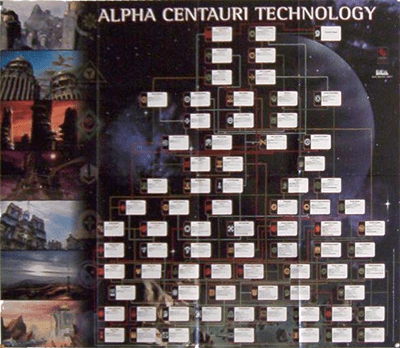
Khan’s approach seems to work best for math. This, not surprisingly, is where his curriculum is most fully developed. The central organizing diagram for his math curriculum is the so-called Knowledge Map. Anybody who’s played a turn-based strategy game will recognize this Tech Tree approach to subject matter. Here’s one that I wasted spent many hours on: Alpha Centauri.

The math knowledge map is quite similar, only instead of “Neural Grafting” and “Silksteel Alloys” it has things like “Multiplying Decimals.”

I’ve started to work through this knowledge tree with my 7-year-old daughter, and I can vouch for the fact that the system works. She likes it. I like it. It’s free. Try it!

Great big boats

I recently read, and thoroughly enjoyed, a book called The Box about the history of the intermodal freight container. If you’d like to know more about the book, I recommend this extensive review by Venkatesh Rao which inspired me to buy the book in the first place. Only 50 years ago, shipping was one of the most insanely inefficient parts of the global economy. As containerization changed that and brought new efficiencies to transport, the entire economy flipped in a way that must have been supremely disorienting to even the most nimble players in the shipping business. Even those who foresaw the coming change couldn’t see how large it was ultimately going to be. For instance, cheap shipping meant that manufacturing jobs didn’t have to be near expensive cities anymore. So a clever textile magnate might move his factory from the Garment District in Manhattan out to Pennsylvania. And he might congratulate himself for a few years before realizing that shipping is so cheap that the jobs are in fact moving to the Pearl River Delta on the far side of the world. And they’re not coming back.

I was alternately sympathetic to and disgusted by the stories of the displaced dock workers and stevedores who had been on top in the old days. Their unions used to call the shots, shutting down entire ports when they were unhappy. It was only natural that they should cling to the old ways with bitter tenacity. But they were all swept aside by the vast tidal change, their political power snuffed out in the span of a few short years.

Once the container ship truly arrived, it put us on a treadmill where efficiency comes from size. Every year the ships get bigger and the capital expenses go up and up. And by god, would you look at the size of these as-yet-unbuilt
Mærsk Triple-E ships. They are the most efficient bulk movers the world has ever seen. Which is a good thing, but wow! where will it stop? It will only stop when the hips of these brutes scrape both sides of the Strait of Malacca as they waddle past Singapore.

The downs and ups and downs of the music industry

Music CDs are dead.

That’s not big news, I know. But it sets up this great story from a friend-of-a-friend source: the aunt of one of our babysitters was running a music industry focus group for teenagers. After answering some questions about their musical habits and tastes, the focus group participants were free to leave. As part of their compensation, they got to walk past a table filled with CDs. These were hit recordings by big name artists. “Take some,” said the researchers. Always in the past these would be quickly scooped up. But now the teenagers looked at them blankly and departed. Left unsaid: “Why on earth would I want one of those things?” The research in question was on how to get teenagers to buy more CDs. It was not an upbeat report.

So money continues to drain from the industry. Alan has written about that from the inside. Is any money coming back in? One way to get money back in is through subscription services.

This Christmas we got a Sonos music system and a subscription to Rhapsody. Sonos is a streaming wireless solution that lets you play your music in any room. You can orchestrate the whole thing from your iPhone. Rhapsody brings the music down from the cloud. It’s not very expensive, and as far as I’m concerned, they have all the music in the world. Now I look at my collection of CDs and ask myself “Why am I carrying all this ridiculous inventory?” Anything I can name, I can quickly play in any room. It’s excellent.

So my music setup makes me happy, and I feel good about supporting musicians by actually paying a monthly fee for my music. Are Rhapsody and other services like it helping much? Now I turn to Exhibit B: The REAL Death Of The Music Industry. This is a Business Insider analysis that strips away any illusions. The music industry is still in a death spiral. Growth in digital products is a tiny compensation for massive losses in other areas, and subscription fees are a small, flat part of digital products. Oh well. I suspect the last guy they lay off will be a lawyer.

The physiology of seeing colors

More colors today, partly in honor of the fact that Alan’s color idioms project just crossed the 700 idiom mark. It’s idiotastic! Since it got picked up by a few blogs (like this and this), it’s even surpassed the Elvish page to be the single busiest page on my site.

This particular post, however, isn’t about how we talk about color but rather how we see color. Here is a very basic question: What is color?

You might reasonably expect a solid physics-based answer to this question. But it’s not so simple. To start the discussion, here’s a diagram that used to puzzle me extremely.

It’s our friend the electromagnetic spectrum. It spans an absolutely vast frequency range of the various kinds of wiggling that photons can do. But look at that rainbow band in the middle that defines visible light. It’s a teeny weeny little thing. You’re being bombarded by electromagnetic radiation all the time and from every direction, and all you can make out is this tiny little sliver of it. Why is that? Why can’t you see ultraviolet and infrared? What color are microwaves? Your iPhone is brilliant twinkling flashlight that distant antennas can see. Why can’t you?

It was a long time before I realized that the problem is framed partly by the chemistry of the eye. Your retina is a delicate lawn of special proteins that sense light when they’re jostled by arriving photons. But if you jostle them too little or too much, no light gets sensed. By way of analogy, think about the annoying wind chimes on your neighbor’s porch. If the wind is a soft lazy breeze, no chime. If it’s a hurricane, the whole apparatus blows away. No chime. When infrared comes knocking on the old eye-door, it may warm your retina, but there’s no chime.

In short, color is defined by physiology. Color is the thing that looks like this. The human is in the loop. I can write the most quantitative of equations about the frequency, wavelength and energy of photons, but as soon as I mention color (or sound for that matter) I have to put an unreliable blob of protoplasm in the driver’s seat. And the way humans sense color is very complicated. And that is what leads us to this enjoyable essay by Jason Cohen of the Smart Bear blog: Color Wheels. For even more detail, Jason points us to this monograph by the enigmatic Bruce MacEvoy.

Room with a view

Check out this little bungalow by the sea. Or land. Or whatever happens to be passing by. The price is high, and the driveway is long, but the view is spectacular.

http://cdn-akm.vmixcore.com/vmixcore/js?auto_play=0&cc_default_off=1&player_name=uvp&width=512&height=332&player_id=1aa0b90d7d31305a75d7fa03bc403f5a&t=b822e8acc3372e9f6a9e4ca2ec83d079

This is the cupola of the International Space Station. This is where everybody wants to sit (float) when they’re off duty, and it’s easy to see why. (via Steve Crandall)

Do you like the taste of beer?

Here’s a good one that Doug passed along. It’s amusing on its own merits, but it’s also a stark illustration of the coming power of statistics. OkCupid is a dating site. There are thousands of dating sites out there, but this one was founded by mathematicians. So not only do they have tons of interesting data on coupling, they’ve also got the math skills to extract some pretty fascinating conclusions.

In a recent blog post, The Best Questions For A First Date, they posed this question. Is there an innocuous question you can ask early in a relationship that yields the same information as the rude question that you’d rather ask? That question of questions, “Will my date have sex on the first date?” turns out to correspond very nicely with a much much safer question: “Do you like the taste of beer?” According to the wizards at OkCupid,

whether someone likes the taste of beer is the single best predictor of if he or she has sex on the first date.

Why? That’s the beauty of statistics! It doesn’t matter why. I’m telling you that it works. Isaac Newton had much the same problem when he tried to explain his law of gravity. “I have no faith in this gravitational law of yours,” they would say, “because you can’t explain how it works.” To this day, nobody understands how gravity works, but Newton’s law is darned useful all the same.

Similarly, we’re a long way from understanding human nature. But the statistics you shed every day are now being stockpiled and distilled, and they reveal an invisible hand shaping your every move. There’s a lot more of this on the way. I suspect that first dates in the near future will start to sound like spies encountering each other behind enemy lines.

HE: The otter is shy but friendly, don’t you think?
SHE: Yes, but would you agree that it is better to be invisible than to fly?
HE: True, but tell me this… do you like the taste of beer?
SHE: >> SLAP! <<