I saw this video of dancing quadrocopters, and it made me think of the new sport of synchronized indoor skydiving. Or as I prefer to call it, upside down square dancing.
You’ll notice they got the music all wrong. Just mute the volume on this video and open up Turkey in the Straw in another window with the volume on. Seriously, try it. It’s worth the effort.
All this aerial dancing raises some interesting possibilities. Can we have hybrid quadcopter/skydiver paired air dancing? Will cyborgs cry when the Bulgarian judge crushes them with a bad rating? Will humans cry when they are crushed by the Cylon judge?
I won’t be satisfied with robot dancing, aerial or otherwise, until it’s performed and choreographed by a robot.
We don’t often think of librarians as powerful people, but by choosing what to preserve, librarians can stitch history from a grab bag of remnants. Especially if those librarians work at the Library of Congress and they’ve been charged with carrying out the dictates of the National Recording Preservation Act.
Just what is the National Recording Preservation Act? Well, our old friend Alan Kennedy, former music industry insider and musical trivia nonpareil, is here to tell us.
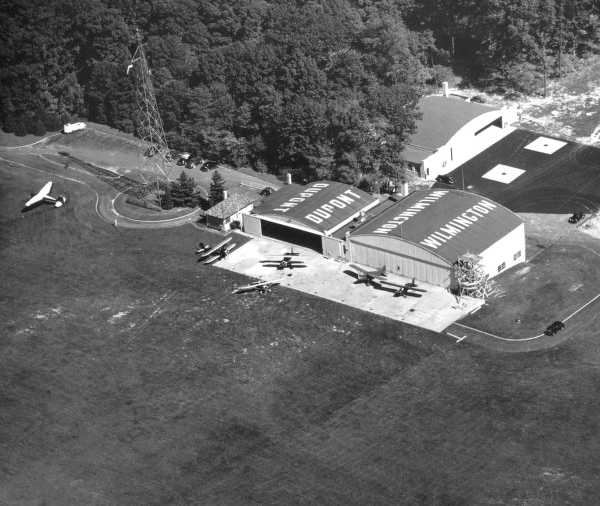
In the early days of aviation, airports would paint their name in big letters on the roof of the terminal. Incoming aircraft had few navigational aids at the time, so turning the territory into something resembling a map was a clever expedient.
I like the fact that nobody on the ground ever saw the sign. It was a well-targeted sign, visible only to the eyes that needed to see it.
Now we all have eyes in the sky. We travel by air more these days, but beyond this, Google and other mapping services have given us a permanent seat in the sky. Deskbound archaeologists can discover previously obscure ruins. But what about signage for the Google Earth set?
It’s arrived in the form of rooftop QR codes. Want to know what company is based in that building? Just scan the code. You’ve heard of cornfield mazes. Now meet the QR cornfield. We should carve a giant QR code onto the moon so that approaching spaceships could scan it. But what to link to? Assuming visiting aliens could decipher the message (and why not? they’ve got a freakin’ spaceship already), it would be good to link them to a video of earth music. Perhaps something by Rick Astley.
That was eight years ago. The Red Sox have enjoyed some great seasons since then, the sting of recent events notwithstanding. But my son Jay continues to be a challenge. He still has no words to tell us what’s bothering him, whether it’s hunger, a headache, or a terrible sore throat (we learned just today that he has strep and may have had it for a while), so he gets frustrated. We do too. As a growing 12-year-old, he is bigger and stronger, much stronger than he was in 2003. When he gets angry and aggressive, keeping him and the people around him safe can be a terrifying exercise. It’s not an experience I’d recommend.
That’s what the Autism Speaks walk is all about: stopping other dads in the future, other moms, and other families from having to deal with raging choking sobbing face of autism, with the thrashing digging claws of autism, with the enduring biting sadness of autism. This Sunday, October 2nd, we’ll be doing our annual pilgrimage to Suffolk Downs to take part in the 2011 Walk Now for Autism event.
Come join us! Or, hey, here’s another idea. If you can’t make it (and I know how busy you are), then you can have some of your money join us instead. We promise to show it a good time, and then we’ll send it off to Autism Speaks to help kids like Jay. Your money will have fun, you’ll feel good, I’ll be happy. Everybody wins!
Here’s the part where you reach for your wallet and click on a link:
Lots of people in high latitudes get to look up at the aurora borealis (or australis as the case may be). But it’s a rare soul who gets to look down on the aurora. Imagine looking out your window and seeing this boiling phosphorescent sea.
Good day to be an astronaut! I was going to say it’s a shame about the extra radiation pounding on the observing astronauts. After all, you might expect ionizing radiation that can squeeze green light out of thin air might make your delicate organs shine with purple fire. But it turns out that aurora at night is a spacefarer’s delight. It actually decreases the radiation impinging on the Space Station.
Here’s a link to the credible version of the story from NASA, but think of it this way. A solar flare is like a gargantuan coughing fit. All that phlegm and sputum from the sun gets in the way of visiting cosmic rays, and that’s a good thing if you’re an orbiting testicle. Or any other part of an astronaut, I suppose.
In other news, my sister-in-law sends this. I dare you not to click on napping panda babies!
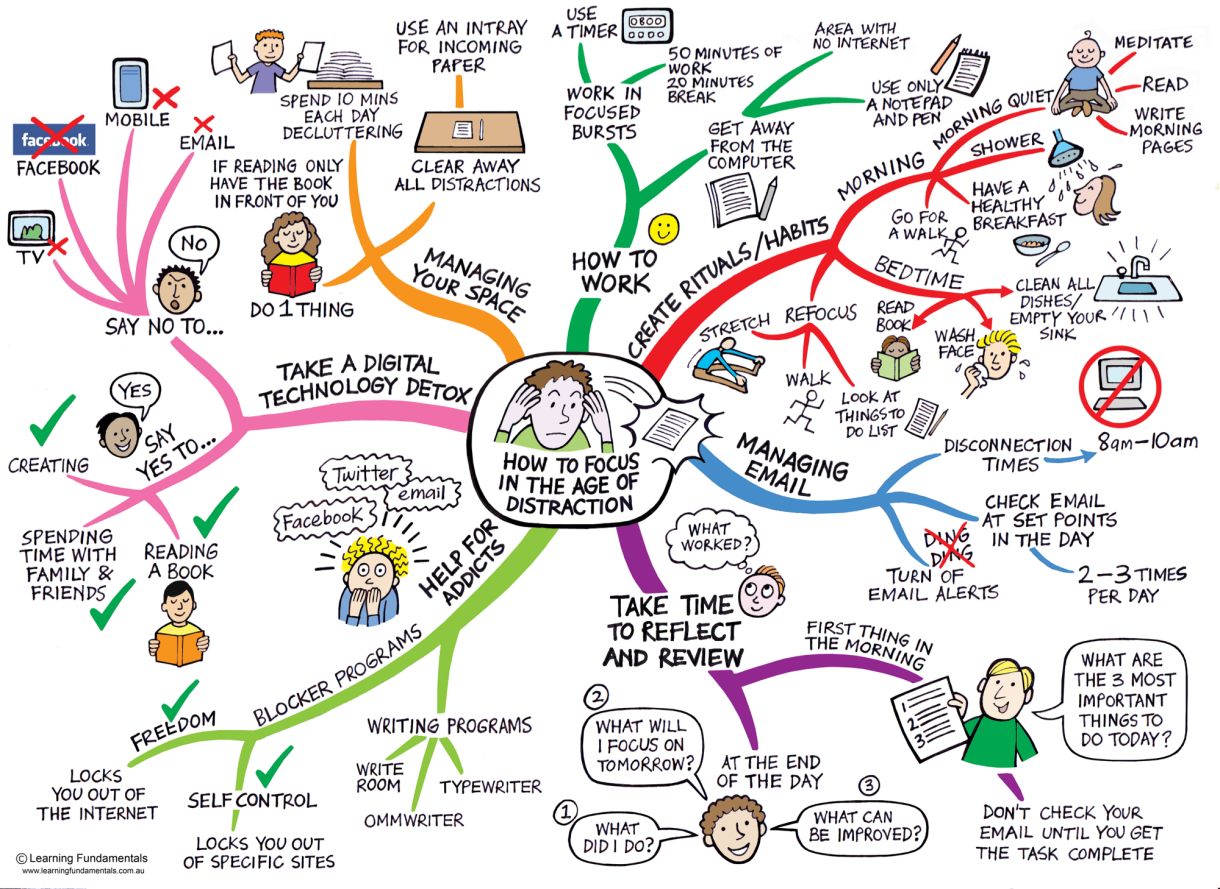
In an age where everything is abundant and colorful noise presses in from all sides, what’s scarce is scarcity. Silence, clarity, focus. If there is an economy of attention, then focus is its currency.
They should teach college classes on focus. The lab would occur on meditation cushions. I’ve heard stories about how, during exams, roommates have “uninstall ceremonies,” where they witness each other removing addictive computer games from their hard drives. That’s a terrific response to a modern problem, a spontaneous ritual that creates intentional space where there was clutter. Whoever can successfully cultivate focus will command a high price.
I came across this nifty review of a book on this very topic: Focus by Leo Babauta. The review is nifty because it comes with this handy mind map that summarizes the book. There, I’ve saved you the price of the book.
On a related topic, I love this video on procrastination. It’s actually a teaser for another book: You Are Not So Smart.
Key takeaway: you’re not one person. You’re many people joined by a calendar. You From Yesterday is a bum who should’ve gone to the gym. But he didn’t. He played a computer game until 3 AM. Not only that, he kept you up half the night. Asshole. But for some reason, some strange reason, you have confidence that You From Tomorrow will do the right thing. Here’s the thing: You have to realize that these guys are related. You From Tomorrow is a bum too. Why do you think he’s going to help you? He’s as bad as You From Yesterday. It’s too late to do anything about You From Yesterday. The cruel part is he doesn’t even have to live with his bad decisions. He blithely hands them to you. Even now he’s still playing that damn computer game. The good news is that it’s not too late to help that feckless layabout, You From Tomorrow. He’s been hanging out with a bad crowd. Take pity on him! For instance, you know the poor guy is wretched when he doesn’t get enough sleep. There’s one nice thing you can do: go to sleep early. Keep in mind how little willpower he has, and set him up for success wherever possible. Limit his options. Take away his computer games.
He’ll hate you at first, but eventually he’ll thank you. And over time you might realize that idiot from yesterday isn’t so bad either.
Look at this video. Don’t miss the part around 2:15 where they zoom in on the squid skin. For years I’ve seen these amazing videos of squids and octopuses showing how rapidly they can change color, but I never had any clear idea how they accomplished it.
It’s amazing to see the restless, boiling appearance of the chromatophores. These color-bearing cells take a constant amount of pigment and either squeeze it down so you can’t see much of it or squash it flat so you see a lot of it. Taken together it amounts to a large flexible low-power color display with a rapid refresh rate.
Say! When you put it like that, it starts to sound like a pretty cool technology. Which of course it is. As you might guess, human engineers are trying to learn from the canny cephalopod. Gamma Dynamics is a company that’s trying to bring chromatophore-inspired electrofluidic displays to an electronic display near you. It has a lot of attractive features: speed, low power, and color. But since it’s not here just yet, we can assume that it’s tricky to get it right. This IEEE Spectrum article on display technologies is clearly somewhat biased, since it was written by the principal scientist at Gamma Dynamics, but it’s a good overview.
A month or so ago I bemoaned the lack of any kind of universal queue for keeping track of web stuff. The basic idea is that I want to take my various interactions with interesting web stuff and stitch it together into one manageable work flow. Instapaper is pretty close to what I want, but not it’s not quite universal enough yet.
Now along comes ifttt, which comes at the same problem from a different direction. I was thinking about the noun, the big queue that I would use to keep track of stuff: Flickr pictures, RSS feeds, movie reviews, newspaper articles. But ifttt is all about verbs. They just opened their doors, and it’s a very impressive service. The name “ifttt” stands for “if this then that,” which in turn is short for the sort of instructions you would give your personal assistant:
“If I put a picture on Flickr, then put it in my Dropbox account.”
“If someone tweets about me, tell me right away.”
“If the gin is cold, bring me a martini.”
Like Instapaper, ifttt is service-agnostic. So it’s well positioned to make friends with everybody. Most of all, I think it’s a proof-of-concept of what comes next, once we agree on standards that can bridge between various proprietary fiefdoms. Things like ifttt will get easier and easier. We’ll look back and realize that Yahoo Pipes was too early, but ifttt showed up right on time.
Physical events cause ripples in information space as well as physical space. For instance, every morning I pass a speed trap on the Massachusetts Turnpike. Usually there’s no cop there, but when there is one, I can detect him well before he sees me. I don’t have a radar detector. I just have to watch for people ahead of me slowing down in an odd way. I don’t see the cop, but I do see the information radiation that they shed: brake light enlightenment. Similarly, there was a famous supernova that was first observed in 1987. Cleverly, someone had the presence of mind to call it Supernova 1987A. But we could have detected approximately when it occurred anyway based on the huge spike in astrophysics papers mentioning the word “supernova”.
All this brings us to the Somewhat Large Earthquake of 2011. Can you detect when and where it happened given only the information contained in Twitter? Yes you can. Look at this SocialFlow analysis. Be sure and try the little map animation near the end.
In the future, when we all live in sealed info-pods, people will be more likely to believe something that was heavily tweeted than something they saw with their own eyes. After all, tweeting is believing.
Perhaps the most mysterious and remarkable property of living systems is that they build themselves. That phrase is loaded, though, because it suggests that there is a builder. But there’s no entity to do the assembling before the assembly has itself started. What living systems do is sort of “fall together.” Unfortunately this defies our everyday logic. We never see anything like it.
Why is it we never see the very thing that makes life possible? It’s because life’s magic happens at the scale of molecules, whereas we observe things at the scale of cats and dogs. There are a lot of molecules in a cat.
This seeming impossibility of complex self-assembly is at the root of a lot of mischief. In particular, it leads many to a deep emotional conviction that there must be something to intelligent design. I’m convinced that if we could make self-assembly more comprehensible, more real, it would lead to corresponding improvements in scientific fluency.
Here is a good three dimensional representation of the kind of self-assembly that viruses do. It has some magnets that simulate the forces of molecular binding. Watch carefully as the random jiggling turns it back into a virus.
If you’d like to get more (virtual) hands-on experience with self-assembly, check out this interactive modeling environment: Molecular Workbench Simulation